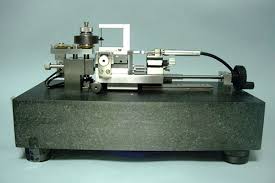
The Gear Double Flank Tester is a precision metrology system used to evaluate the composite quality of gears by measuring transmission error and variation under loaded conditions. This method is essential for identifying imperfections such as pitch errors, profile deviations, and eccentricity. Using a reference master gear, the tester rotates the test gear in mesh, capturing real-time rolling characteristics across the full flank width.
Key Features
Double Flank Rolling Test: Measures total composite variation between a master gear and the test gear with constant center distance.
Non-Destructive Inspection: Ideal for final quality checks without damaging the gear.
High Sensitivity Gauging System: Detects minute variations in center distance or angular motion.
Digital Data Capture: Interface with SPC software for real-time analysis, storage, and quality reporting.
Adaptable Fixtures: Accommodates a wide range of gear sizes and profiles, including spur and helical gears.
Measurable Parameters
Total Composite Error (TCE)
Tooth-to-Tooth Variation (TTTV)
Runout or Eccentricity
Backlash (indirectly, by analyzing error patterns)
Noise Signature (optional with acoustic/vibration modules)
Applications
Automotive: Transmission gears, differential components, e-mobility systems